
Insights · Multilayer bags
Choosing a moisture barrier bag for dry packing under J-STD-033
What IPC/JEDEC J-STD-033 says about moisture barrier bags, floor life and dry packing – and what to ask a bag supplier for.
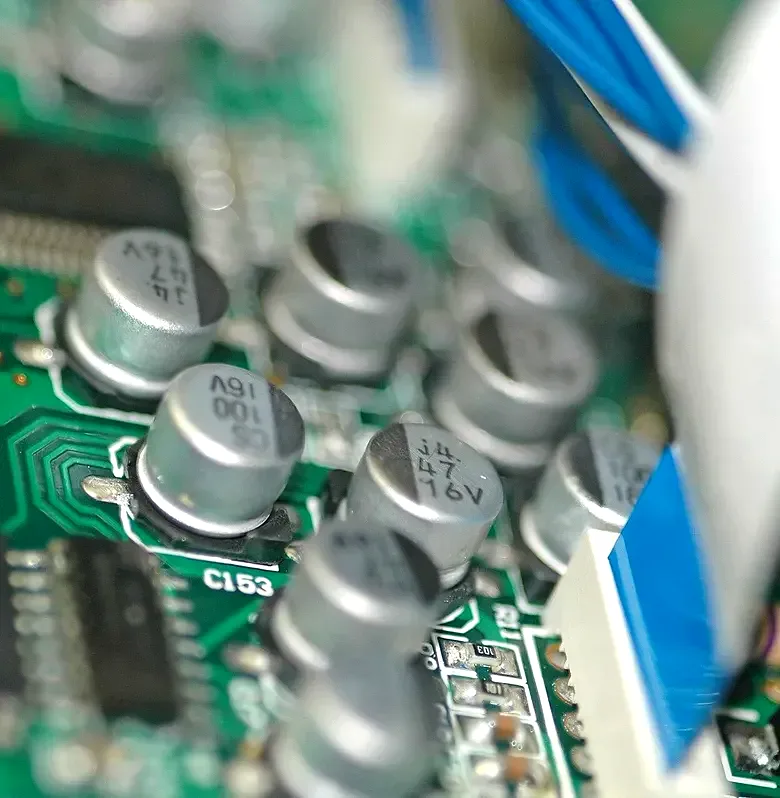
Many plastic-encapsulated surface-mount devices (SMDs) absorb moisture from the air. During reflow soldering that moisture can turn to vapour and damage the package. The joint industry standard IPC/JEDEC J-STD-033 sets out how such moisture-sensitive devices are handled, dry-packed, shipped and used.[1]
Moisture sensitivity level and floor life
Each device is assigned a moisture sensitivity level (MSL). The standard links each level to a "floor life" – the time a device may spend out of its sealed bag at factory ambient conditions of ≤30 °C / 60 % RH before it must be reflowed or re-dried. For example, 168 hours for MSL 3, 72 hours for MSL 4 and 48 hours for MSL 5 at ≤30 °C / 60 % RH, while MSL 1 is unlimited at ≤30 °C / 85 % RH (per J-STD-033; see also TI application report SPRABY1A – check the current revision).[1][4] The current edition, J-STD-033D (2018), states that its procedures provide a minimum shelf life of 12 months from the bag seal date when properly implemented.[3]
What the standard asks of the bag
Under IPC/JEDEC J-STD-033, the moisture barrier bag must meet MIL-PRF-81705 Type I and have a water-vapour transmission rate of no more than 0.0310 g/m² (0.002 g/100 in²) per 24 hours at 40 °C after flex testing (per J-STD-033C/D clause 3.3.2.1 – check the current revision).[2] The bag must also be heat-sealable.[2]
A dry pack under the standard is more than the bag: it also includes desiccant and a humidity indicator card, sized and placed as the standard describes.[2]
Questions to ask a bag supplier
- Which J-STD-033 edition and which MIL-PRF-81705 type does the bag claim to meet – and is there a test report for the WVTR after flex?
- What is the laminate structure (for example a polyester / aluminium foil / polyethylene construction) and total thickness?
- Are the surface-resistance values stated, and with which test method?
- Is the test report recent and for the same construction you are buying?
Sources
- JEDEC – J-STD-033C catalogue page, Table 5-1 (free download, registration required)
- JEDEC – J-STD-033C catalogue page, clause 3.3.2.1 (free download, registration required)
- ANSI Webstore – IPC J-STD-033D-2018 abstract (archived copy)
- Texas Instruments – Application Report SPRABY1A, MSL Ratings and Reflow Profiles, Table 1
Sources accessed 10 October 2026. Standards are summarised, not reproduced; consult the official edition.
Disclaimer: General information for reference only – not technical, engineering, legal or medical advice. Always follow the current official edition of the standards cited, your own risk assessment and the manufacturer's data.
More insights
- Shielding, metalized or antistatic bag? Understanding ESD packaging terms
- How to select cleanroom gloves: class, cleanliness data and ESD
- Nitrile vs latex powder-free gloves for food handling and healthcare
- Chemical-resistant gloves: permeation, degradation and EN ISO 374
- Vietnam's semiconductor push: what the 2030 strategy says